May 10 2008

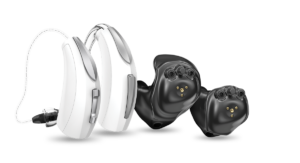
Hearing aid Care & Maintenance

Published by donna under blog

List of things to avoid:

Avoid the use solvents or alcohol on the hearing aids as there is a possibly that they can breakdown the hearing aid material. There are special wipes you can purchase that are designed specifically for the cleaning and disinfecting of hearing aids. When you come in, we can talk about these disinfectants if you are interested in them.

Avoid allowing the hearing aid to become wet. Avoid showering, bathing, or going into the swimming pool or sauna with the hearing aid(s) in your ears.

Avoid place the hearing aid(s) in direct heat.

Avoid place the hearing aid(s) in a microwave or conventional oven this will damage the hearing aid(s). To dry a damp hearing aid just open the battery door and allow it to dry out on its own. There are special dehumidifiers or desiccants available that do a wonderful job in drying out the hearing aid(s). If you are interested in the dehumidifiers or desiccants we can talk about them when you come in. Avoid storing your hearing aid(s) in a car on hot days.

Avoid dropping the hearing aid(s). If the hearing aid falls on a carpet, rug or upholstered furniture it usually will not cause the aid any harm. Hard floored surfaces or counter tops have the potential of damaging the hearing aid. I recommend when learning to insert your hearing aid(s) to place a pillow on your lap, a towel on the table or counter to cushion the fall if by chance the hearing aid(s) gets dropped.
Hearing Aid Batteries:

The most common type of hearing aid battery is Zinc-Air. Zinc-Air batteries may last up to 2 ½ times longer then mercury and are much better for the environment.  Zinc-Air batteries have a paper or plastic tab covering very small holes on the back of the battery. This tab prevents the battery from getting air that is needed to make the battery work.  As long as the tab has never been removed, these batteries can be stored for more than one year. When ready, remove the tab and place the battery in the hearing aid. It is important to note that once the tab is removed, the battery will start to drain slowly and will need to be used. If the tab is inadvertently removed, do not replace it. Once the battery has air to activate it, starving it of air will make it drain very quickly.

Batteries should be stored in a cool, dry place. Storing them in a refrigerator may shorten the life of the battery.

Hearing aid batteries are different then normal batteries in that they operate at full power until they are almost fully drained, and then they stop quite abruptly. However, you never know when this will happen. ALWAYS carry extra batteries. Avoid letting the batteries touch each other even when the tap is still on the back this will start a trickle drain.

Remember batteries are dangerous if swallowed. Keep them away from small children and pets. If a battery is swallowed, see a doctor immediately or call the Battery Hotline at 202-652-3333.

You can contact me at Accurate Hearing Systems, LLC with any questions or to make an appointment.

Monday – Friday 9:00am – 5:00pm
510 W Tudor Rd Ste 3
Anchorage, AK 99503
907-644-6004

Hearing Aid Care and Maintenance

At night when the hearing aid(s) are removed: The first thing you should do when removing them at night is wipe them down with a dry soft clothe, Kleenex or disinfected wipe. Open the battery, door place them in their case with the battery door left open this will allow moister to escape and help prolong battery life. In the morning turn the hearing aid with the part the goes into your ear canal pointed down softly brush the opening with a dry toothbrush. Turn the hearing aid over and gently brush the other side with the battery door closed. It’s important to do this in the morning when the wax has had a chance to dray.

No responses yet

Apr 28 2008

Hearing loss prevention program = less money

Published by donna under blog

What is occupational noise exposure?
     Occupational Deafness, Industrial Deafness or Noise Induced Hearing Loss as it’s sometimes referred to, is a deterioration of a person’s hearing over a prolonged period of time as a result of their working environment. Exposure to high levels of noise causes hearing loss and may cause other harmful health effects as well.
     A good hearing loss prevention program is good business, it shows employees that management is concerned. Management showing concern can improve productivity and product quality. There is grater efficiency with lower noise levels when the job is complex and requires concentration. Studies of noisy companies that have implemented hearing loss prevention programs show reductions in accident rates, illnesses, and lost time.
     Hearing loss prevention extending beyond the workplace: Companies should encourage employees to take their hearing protection home and wear them during their noisy off-job activities to reduce the possibility of home activities turning into a work related claim.  Noise exposures greater than 85 dB may cause hearing loss; even short bursts of sound over 90 dB can have an impact. Hair dryer / power lawnmower – 90 dB Belt sander – 93dB Tractor – 96 dB  Hand drill – 98 dB chain saw – 110 dB 12-gauge shotgun – 165 dB
     High Frequency Noise Filter -  Hocks Noise Brakesr is an acoustic filter that adjusts all incoming sound to appropriate speech levels. While most hearing protection seals off the ear, effectively blocking any sound from entering, this high frequency noise filter lets air and sound through in a safe, effective way. As a result, the wearer can communicate freely and remain aware of the surrounding environment. This is a big cost-effective benefit when employees can easily communicate with one another.
     Sonic Valve Earplug provides comfortable protection for loud environments takes the “sting” out of gun blast noises and helps reduce “noise hangover” from loud music. Unlike earmuffs or solid earplugs, the Sonic Valve’s open fit reduces high level noises while enabling you to hear the subtle sounds of conversation. Law enforcement officers, pilots, racecar drivers and industrial workers use Sonic Valve to protect their inner ears from permanent damage.
     The Hocks Noise Brakesr and Sonic Valve earplug both are a custom fit earmold and is made with a soft washable material. The soft material makes them extremely comfortable to ware and easy to put in. The venting stops the pressure from building up in the ear canal making it comfortable to wear for long periods of time.
     A good hearing loss prevention program is consistent with good health and good business. Reduced noise exposure may result in less fatigue, irritation, and possibly fewer stress-related health complaints. The company benefits from reduced worker compensation payments and medical expenses. Reduced noise exposures may improve employee morale, and some cases, higher production efficiency.
     Accurate Hearing Systems, LLC offers free hearing tests and consultations. Together we can prevent unnecessary hearing loss. Call Accurate Hearing Systems and make an appointment for a free hearing test 644-6004

No responses yet

Apr 25 2008

Hearing loss denial

Published by donna under blog

Hearing is an essential for communication in the work place. For most employment verbal communication is a vital part effectively talking with the public, critical to assure safety in the workplace and communicating with co-workers. Without the aid of a hearing aid one might be underemployed due to communication gab. Also, a decrease in the quality of life such as anxiety, depression, social isolation, social paranoia, medical health, emotional stability, cognitive functioning, etc all these can negatively impact job performance. Delay of getting treatment for a hearing loss is usually due to vanity, denial or fear of stigmatization.
There is several reason why not to leave a hearing loss untreated, however the real tragedy is that it affects everyone not just the person with the hearing loss. In some cases the family is unrecoverable from such an impact, lost wages, lost promotions, lost opportunities, unrealized dreams, and is some cases lower income for their retirement.
Surveys have found that 7 out of 10 spouses feel annoyed when their spouse cannot hear them. The key is that the problem of your loved one cannot be fixed as long as they believe there is no problem. It’s important that for the one living with the person with the hearing loss to identify their own negative feeling with the hearing loss.
Take this yes or no questionnaire and you might gain insight on these feelings. 
1. Do you feel angry that your loved one is not getting help?
2. Do you think you contribute to the problem by being upset?
3. Does it upset you when you have to repeat yourself?
4. Do you “fill in the gaps” your loved one doesn’t hear?
5. Do you resent filling in these gaps?
6. Do you sometimes comply with your loved one’s request to avoid certain social situations because of the hearing loss and as a result do you resent this?
7. Do you feel your loved one is vain?
8. Do you believe your loved one’s self-image (vanity) is more important than his need to hear?
9. Do you resent this?
10. Do you think your loved one feels it is more important to maintain the illusion of hearing normally rather than taking positive action to do something about it?
11. Do you find yourself arguing with your loved one over issues of not hearing?
12. Do you get frustrated socially when your loved one engages in conversations that result in obvious hearing problems?
The more yes answers you have the more you have something to resolve.
One of the most common issues is resentment toward your hard of hearing loved one when they do nothing about their hearing loss. You resent them for not doing anything, then you resent yourself for resenting them. Sometimes this can turn into anger toward your loved one and your loved one has no idea why you’re angry.
Here are some helpful tips on how to help your loved on get some help.
1. Stop repeating yourself! Explain to your loved one every time they ask you to repeat that you are going to say “Hearing Aids” or a code word so they can be more aware of how often this really happens during the day.
2. Stop yelling! This makes you hoarse and results in stressing your throat and vocal cords.
3. Do not try to talk to them from another room.
Hopefully this will help bring your loved one out of denial of a hearing loss.
Please e-mail or call me with any questions.

No responses yet